

Customs Under Management: When Customs Positions Are Put To The Test
Most customs issues don’t arise because a position is wrong. They arise when a business cannot evidence and support it within required timescales. This article explores why defensibility often breaks down, how reliance on memory and fragmented data increases risk, and what resilient organisations do differently to remain confident under scrutiny.
Can You Defend It?
Most businesses can describe how their customs processes work.
Far fewer can support them calmly when they are challenged.
That distinction only becomes clear when someone asks for evidence.
Defending a position is rarely about being right
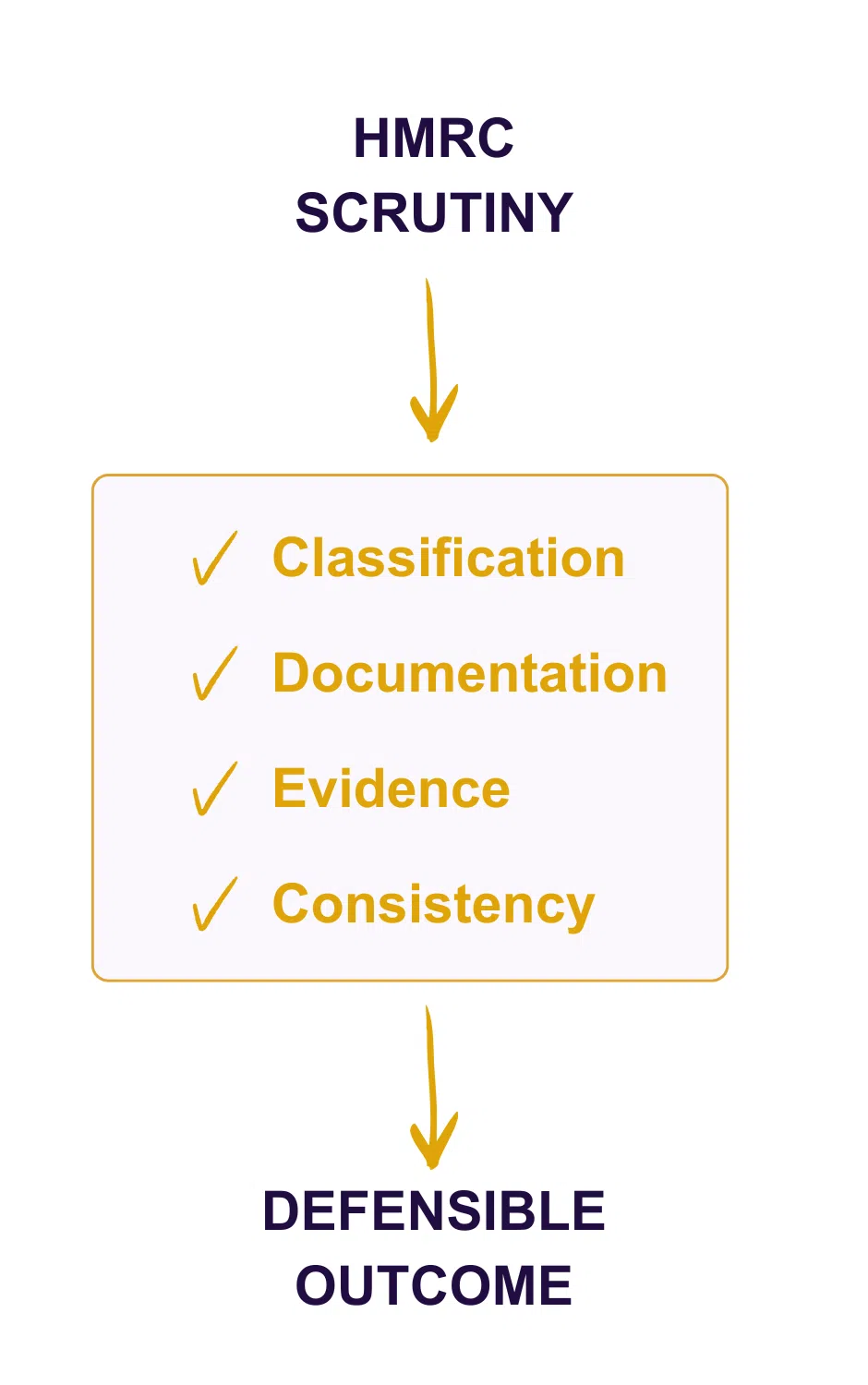
In practice, scrutiny focuses less on individual declarations and more on how decisions are made and applied.
Questions tend to centre on:
- How classifications were determined.
- How origin claims are supported.
- How values are calculated.
- Whether positions are applied consistently.
At that point, the question is no longer “do we understand our customs position?” It becomes “can we support it?”
Being technically correct is not always enough. Decisions need to be:
- Understood.
- Evidenced.
- Defensible over time.
Where Defensibility Usually Breaks Down
In our experience, businesses struggle to defend customs positions for familiar reasons.
- Key decisions were taken years ago and never revisited.
- Judgement was applied, but not recorded.
- Knowledge sits with individuals who are no longer involved.
When challenged, teams are forced to reconstruct explanations under pressure. That creates uncertainty and increases risk, even if no underlying issue exists.
Why This Matters At Senior Level
This is where customs stops being theoretical and becomes personal for senior finance leaders.
Under Senior Accounting Officer obligations, CFOs are required to take reasonable steps to ensure appropriate tax accounting arrangements are in place. Customs decisions form part of that responsibility.
The issue is rarely whether a business understands its customs processes in principle. The issue is whether those processes can be evidenced quickly and coherently when asked.
A position that cannot be supported within HMRC timescales creates uncertainty, even if no error exists. Boards are understandably uncomfortable with areas of the business where exposure only becomes visible once scrutiny begins.
Explanation, Reliance And Evidence Are Not The Same Thing
Being able to explain a customs position is important.
Having a resilient team that understands how things work is essential.
But neither guarantees that a position can be defended.
Defence requires the ability to produce evidence quickly, accurately and in context.
This is where many businesses struggle.

Where Things Usually Fall Down In Practice
During an HMRC audit, requests are often specific and time-bound.
For example, HMRC may ask for evidence supporting a preferential origin claim against a particular entry number. To respond, a business must be able to:
- Identify the entry.
- Link it to the correct commercial invoice.
- Locate the supporting origin evidence.
- Demonstrate that the claim was valid at the time of import.
In theory, this should be straightforward.
In practice, data often sits in different places:
- Brokers hold customs declaration data.
- HMRC holds CDS records.
- The business holds its own commercial systems, including invoices.
If those data sets cannot be reconciled easily, even routine requests become difficult. Teams spend time stitching information together under pressure. Evidence exists, but it cannot be retrieved quickly enough.
This is where defensibility usually breaks down because the audit trail is fragmented.
A More Useful Test
Rather than asking whether customs processes are understood or whether the right people are in place, a more revealing question is:
Could we evidence and support our customs positions within HMRC timescales if asked tomorrow?
If the answer is uncertain, that does not indicate failure. It highlights where visibility, data structure or documentation could be strengthened.
Addressing those gaps early allows businesses to control the narrative, rather than responding reactively under pressure.
Customs positions that can be defended are rarely improvised. They are built over time, through clear ownership, consistent decision-making and accessible evidence.
Can You Defend Your Customs Position?
If your customs positions would be difficult to support under scrutiny, Barbourne Brook can help you strengthen the evidence, governance and data visibility needed to defend decisions with confidence. We work with businesses to ensure customs positions are not only understood internally but can be evidenced clearly when HMRC asks. Get in touch here.
Read More From This Series:
Customs Under Management: Can You Explain It?
Contact Our Team …
Related Posts

What You Can’t Explain, You Can’t Control: The Visibility Gap in Supply Chain Customs
A supply chain director who has told…