

Customs Under Management: When Customs Knowledge Sits With One Person
Most customs problems don’t begin with regulatory change. They begin when critical knowledge leaves the business. This article explores how person-dependency quietly increases customs knowledge risk, why it often goes unnoticed, and what resilient organisations do differently to maintain continuity, control and confidence.
Can You Survive It?
Most customs issues don’t arise because the rules change. They arise when the person who understands how things work is no longer there.
In our experience, customs functions are often far more dependent on individuals than businesses realise. As long as that individual is in place, things appear to run smoothly. When they leave, the gaps become visible very quickly.
That is the real test of whether a customs function can survive change.

The Hidden Single Point Of Failure
In many organisations, customs knowledge accumulates with one person over time.
They understand why certain positions were taken, which suppliers cause issues, how exceptions are handled, and where the risks sit. None of this is deliberate or negligent, it’s simply how specialist knowledge develops in a complex area.
The problem is that this understanding is rarely formalised.
When that individual moves on, businesses often find that:
- Decisions were never properly documented.
- Responsibility was assumed rather than defined.
- Key judgements exist only as institutional memory.
- Processes aren’t being followed in practice.
What felt efficient turns out to be fragile.
Why This Usually Goes Unnoticed
As long as goods are clearing and issues are being resolved, there is little incentive to step back and assess resilience.
Customs duty is therefore often seen as “under control” because it functions day to day. But functioning and being resilient are not the same thing. The question is not whether someone can fix issues, it is whether the business can operate without relying on a single source of knowledge.
This distinction rarely becomes clear until something changes.
The Operational Impact Of Knowledge Loss
When customs understanding is person-dependent, the effects are practical rather than dramatic.
Teams spend time reconstructing information.
Historic data becomes difficult to interpret.
Savings and reclaims stall because the context is missing.
Errors reoccur because the rationale behind previous decisions is no longer clear.
Over time, this leads to higher costs, slower decision-making and reduced confidence, even if nothing is technically “wrong”.

What Resilient Customs Functions Do Differently
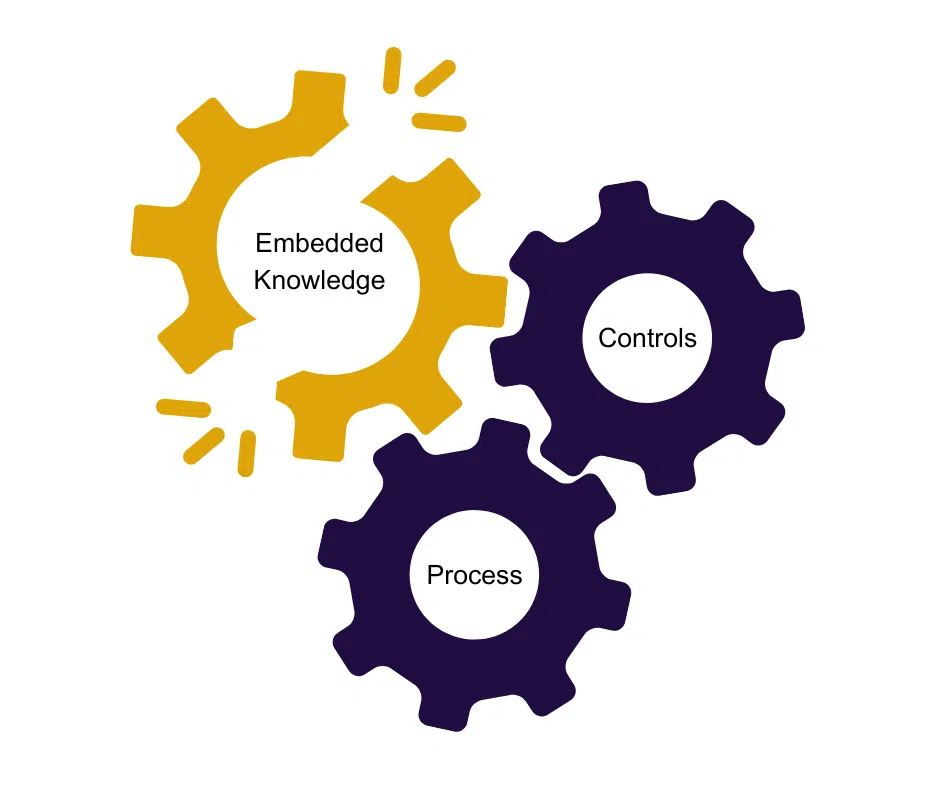
The organisations that cope best with change tend to have one thing in common. Customs knowledge is embedded in the function, not held by an individual.
They can explain:
- What sits within their duty under management.
- How decisions are made and reviewed.
- Which activities are outsourced and which are retained internally.
This doesn’t require large in-house teams. In practice, many businesses achieve resilience by ensuring there is continuity of oversight, i.e. someone who understands the customs function end-to-end and retains that understanding as people, systems and suppliers change.
An external resource can play that role effectively, acting as an independent, all-seeing view across the function. This protects against knowledge leaving the business and allows support to scale up or down as requirements change.
A Useful Test To Apply Now
A simple question often brings clarity:
“If the person who understands customs best leaves tomorrow, what would the business struggle to explain? ”
If the answer is “quite a lot”, that isn’t a failure. It’s an indication that resilience hasn’t been designed in yet.
Addressing that early by clarifying ownership, documenting decisions and ensuring continuity of insight is far easier than doing so under pressure.
Customs functions that survive change are not built on memory. They are built on visibility, continuity and control.
Is Your Customs Knowledge Truly Embedded?
If critical customs understanding sits with individuals rather than within your control environment, Barbourne Brook can help you formalise processes, clarify ownership, and strengthen the documentation that supports operational continuity and audit readiness. Get in touch here.
Read More From This Series:
Customs Under Management: Can You Explain It
Contact Our Team …
Related Posts

What You Can’t Explain, You Can’t Control: The Visibility Gap in Supply Chain Customs
A supply chain director who has told…