

A Ruling That Should Not Be Ignored
In November 2024, O’Neill Wetsuits Ltd won a First-tier Tribunal case against HMRC over the classification of its imported wetsuits. HMRC appealed. On 26 March 2026, the Upper Tribunal overturned that decision entirely, reclassifying the wetsuits from Chapter 40 (rubber, 4% duty) to Chapter 61 (textiles, 8% duty).
This article examines what the case was actually about, why the technical distinction at its heart extends well beyond wetsuits, and what the financial and compliance implications are for any UK importer of composite goods.
It also sets out the three questions every importer should be asking now, and why acting before HMRC does is the only defensible approach.
Upper Tribunal Overturns Wetsuit Ruling: If They Came Back For This, What Else Are They Reviewing?
HMRC lost a customs classification case. Most businesses in that position accept the outcome and move on. HMRC appealed, and won.
The question every UK importer should now be asking is not what this means for wetsuits. It is what it means for them.
A Ruling That Should Not Be Ignored
In November 2024, O’Neill Wetsuits Ltd won a First-tier Tribunal (FTT) case against HMRC over the classification of its imported wetsuits. It was a clear decision in the importer’s favour. The lower duty rate, 4% under Chapter 40 of the UK Trade Tariff was confirmed.
HMRC appealed.
On 26 March 2026, the Upper Tribunal (Tax and Chancery Chamber) overturned that decision entirely. The wetsuits are classified under Chapter 61, the textiles chapter at 8% duty. Every shipment that entered the UK under the Chapter 40 rate is now in question.
This is not a minor procedural development. HMRC pursued a specialist tribunal ruling it disagreed with, took it to a higher court, and succeeded. That matters enormously, not just for wetsuit importers, but for every business whose classification position rests on assumptions that have never been tested.
What the Case Was Actually About
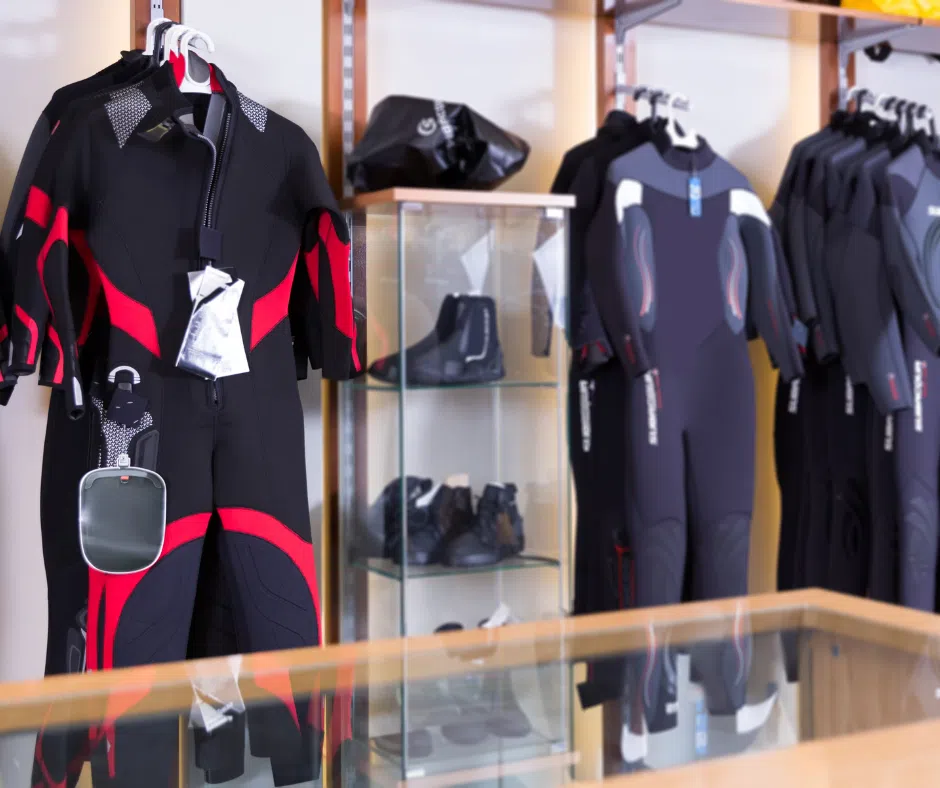
O’Neill’s wetsuits are constructed from panels of cellular neoprene rubber. The majority of those panels are covered with knitted textile fabric on both sides. A smaller number carry textile on one side only.
O’Neill argued, and the FTT agreed that the textile layers served merely as reinforcement for the neoprene, that the rubber provided the essential character of the garment, and that Chapter 40 was therefore the correct classification.
The Upper Tribunal disagreed on a point that sounds technical but carries significant financial weight.
The first step in classifying the wetsuits was to determine how to classify the different materials used in their construction.
Under internationally recognised customs classification guidance, which, while not legally binding in the UK, carries significant persuasive weight, the starting point is that rubberised textile fabrics are treated as textiles, unless the fabric is there purely to reinforce the rubber rather than as a material in its own right.
Crucially, where textile is bonded to both sides of a rubber layer, the whole panel is classified as a textile material. Where textile appears on one side only and has a reinforcement purpose only, the panel is classified as rubber.
The majority of O’Neill’s panels were double-sided. The FTT, the Upper Tribunal found, had applied the reinforcement exclusion too broadly and failed to make that distinction.
The correct classification is Heading 6113, Chapter 61: garments made from rubberised textile fabric. Duty rate: 8%.
Why This Is Bigger Than Wetsuits
Here is the question that should be keeping importers awake.
If HMRC was willing to appeal a first-instance tribunal loss over a 4 percentage point duty differential on wetsuits, what does that tell you about how it approaches classification disputes more broadly?
The answer is uncomfortable. HMRC has demonstrated that it will pursue cases it considers technically correct, regardless of an initial ruling against it, and that it has both the appetite and the resource to do so. A first-instance win, whether at FTT or through an earlier ATaR challenge is not a line in the sand. It is a position that can be revisited.
For any importer who has classified composite goods by reference to material composition without rigorously applying the full hierarchy of tariff rules, that is a serious concern. The O’Neill case did not turn on a vague or contested principle. It turned on a precise reading of Chapter Notes that the FTT, a specialist body, got wrong. If a specialist tribunal can misapply the rules, so can an in-house team, a customs broker, or an external adviser operating without full visibility of the construction detail.
The principle at the heart of this ruling extends well beyond wetsuits. Any product where rubber or neoprene is sandwiched between layers of textile – sporting garments, protective workwear, industrial equipment, specialist footwear may be subject to the same classification logic. If your commodity code rests on an assumption that the non-textile component provides essential character without fully interrogating the construction, that assumption has now been tested in court. It did not hold.
The financial exposure compounds quickly. The difference between 4% and 8% duty across high-volume import programmes is not a rounding error. Multiply it across multiple shipments, add the risk of historic underpayment, and the number becomes significant.
‘Most importers assume that if HMRC challenges a classification and loses, the matter is resolved. This case shows that is not how HMRC thinks. They appealed, they prepared a stronger case, and they won at a higher level. The implication for businesses is straightforward: a classification position that has not been stress-tested against the full legal framework is a liability, not an asset. The time to find that out is before HMRC does.’
Adam Wood, Chief Commercial Officer at Barbourne Brook
The Three Questions Every Importer Should Be Asking
1.Are your commodity codes built on evidence or assumption?
Classification that relies on general product descriptions, broker convention, or historical precedent rather than a rigorous analysis of construction, material composition, and the relevant tariff notes is vulnerable. The O’Neill case shows how far that vulnerability can travel.
2. Have you reviewed your classification in light of this ruling?
If you import wetsuits, act immediately. If you import any composite good where rubber or neoprene is combined with textile fabric, commission an independent review. Do not wait for HMRC to raise the question first.
3.Do you have an ATaR in place?
An Advance Tariff Ruling is the only mechanism that provides legally binding classification certainty. O’Neill sought one, and HMRC’s original ruling of 8% has ultimately been upheld through two levels of appeal. The implication is not that ATaRs are pointless. It is that they work, and that challenging one without robust grounds is a costly strategy.
Act Before HMRC Does
The businesses most exposed by this ruling are not necessarily those who will recognise themselves in it. They are those importing composite goods who have never asked the question.
Barbourne Brook’s Customs Landscape Review examines your classification methodology alongside your wider customs profile. We identify where your commodity codes are well-founded and where they carry risk, before those risks materialise.
Whether you need a classification review, support with an ATaR application, or independent assurance over your existing codes, our team has the expertise to help.
Contact Barbourne Brook today to arrange a Customs Landscape Review.
Contact Our Team …
Related Posts


What You Can’t Explain, You Can’t Control: The Visibility Gap in Supply Chain Customs
A supply chain director who has told…