

Mobility Scooters, Customs Duty And The Long Arm Of HMRC: Why The Upper Tribunal Decision Matters
In January 2026, the Upper Tribunal handed down a decision that will be uncomfortable reading for many importers of specialist and “borderline” products, particularly those who may have taken comfort from earlier tribunal wins.
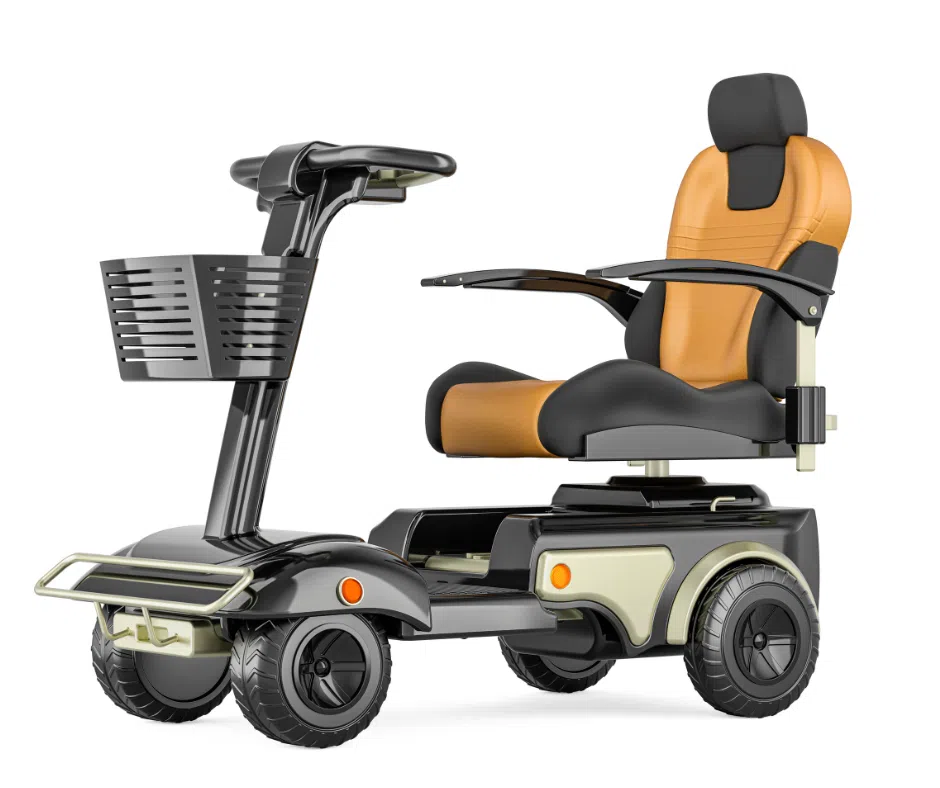
The case, Electric Mobility Euro Ltd & Sunrise Medical Ltd v HMRC, concerned the customs classification of mobility scooters. On the face of it, this is a narrow, technical dispute. In reality, it tells a much bigger story about HMRC’s appetite for litigation, the limits of tribunal discretion, and the risks importers carry even after winning at first instance.
The Issue In Simple Terms
At the heart of the case was a deceptively simple question:
Are mobility scooters “carriages for disabled persons” (duty-free), or are they motor vehicles for the transport of persons (10% customs duty)?
- The importers argued for CN heading 8713 (Carriages For Disabled Persons).
- HMRC argued for CN heading 8703 (Motor Vehicles) .
The difference is material. A 10% duty rate, applied retrospectively across multiple years of imports, quickly becomes a seven-figure issue.
A Reminder: This Wasn’t A Speculative Claim
It’s important to pause here.
This was not a weak or opportunistic argument.
The importers succeeded at the First-tier Tribunal (FtT). The FtT accepted that the scooters were:
- Designed for people with non-marginal walking impairments.
- Marketed explicitly around independence and mobility.
- Ill-suited to use by people without mobility limitations.
On that basis, the FtT concluded the scooters fell within heading 8713, following established CJEU authority (Invamed).
At that point, many businesses might reasonably have thought: we’ve won.
Why HMRC Appealed And Why That Matters
HMRC took the case to the Upper Tribunal, arguing that the FtT had made a legal error by not applying an EU Classification Regulation from 2009.
This is where the case becomes particularly instructive.
The 2009 Regulation describes a four-wheeled electric vehicle which, in many respects, looks exactly like a mobility scooter, and classifies it under 8703, not 8713. The regulation states that classification under 8713 is excluded because the vehicle:
- Is not specially designed for disabled persons, and
- Has no special features to alleviate a disability.
The FtT considered this regulation carefully and concluded it did not apply by analogy, largely because:
- The scooters before it were designed for disabled users, and
- The CJEU had already provided guidance on how to classify mobility scooters.
The Upper Tribunal disagreed.
The Upper Tribunal’s Key Message
The Upper Tribunal set aside the FtT decision and found in HMRC’s favour. The core reasoning can be summarised like this:
If a classification regulation exists, and the goods are sufficiently similar, it must be applied, unless it has been declared invalid.
Some of the more important nuances:
- The FtT itself had accepted that the scooters shared the same core design features as those in the 2009 Regulation as no special features to alleviate a disability.
- Differences in size, comfort, speed or transportability were not considered material.
- The “reasons” column of the regulation could not be used to side-step its application.
- To fall within 8713, a product must have specific design features that directly alleviate disability, not merely be beneficial or helpful to disabled users.
- Mobility scooters with separate adjustable steering columns are consistently treated in EU case law as falling outside 8713.
The Tribunal also rejected arguments that the 2009 Regulation was invalid, including claims that it conflicted with disability rights principles.
Why This Decision Is Bigger Than Mobility Scooters
This case matters well beyond this product category.
Three wider points stand out.
- HMRC will pursue classification disputes all the way up.
This is now a familiar pattern. Where HMRC sees a point of principle, particularly one affecting consistency and revenue, it is prepared to litigate through multiple tiers.
Winning at the FtT does not mean the risk is over.
- “Designed for disabled persons” is a high bar.
This decision reinforces that intent, marketing and user benefit are not enough on their own. The focus is on objective, physical design features that directly alleviate disability, a distinction that many importers underestimate.
- Classification regulations carry real weight.
Even where tribunals are sympathetic to commercial reality, classification regulations exist to remove discretion. If your product sits close to one of these regulations, that is where HMRC will anchor its case.
A Balanced Reflection
It’s also worth saying this: the arguments advanced on behalf of the importers were serious, carefully reasoned and grounded in existing authority. This was not a case of “getting it wrong”, but of how finely balanced classification disputes can be.
The difficulty for importers is that, where a balance exists, HMRC tends to keep pushing until certainty is imposed, even if that certainty only arrives at the Upper Tribunal level.
What Importers Should Take From This
If there is a single takeaway, it is this:
Classification risk doesn’t end with a reasonable argument, or even a tribunal win.
For businesses importing products that:
- Sit between headings.
- Rely on purpose or end-user arguments.
- Are supported by older case law but affected by classification regulations.

…this decision is a reminder to re-test assumptions, particularly where historic duty exposure is significant.
We may reach out to practitioners involved in the case for comment, as this is an area where informed debate continues, and where real commercial consequences follow from legal nuance.
Source: Electric_Mobility_Euro_Ltd_v_-HMRC_-_Decision_for_Release.pdf
How Does This Affect Your Business?
If you would like to discuss how this decision might affect your own classifications, audits or historic exposure, now is a sensible time to do so, before HMRC asks the question first.
Contact Our Team …
Related Posts

What You Can’t Explain, You Can’t Control: The Visibility Gap in Supply Chain Customs
A supply chain director who has told…