

Modern Software Has Changed The Maths On Broker Declarations. Has Your Business Done The Sums?
At high enough volume, the running cost of using a customs broker outweighs the cost of doing the work yourself, as long as you invest up front. But a botched in-house setup is worse than keeping the broker, and whoever files the declaration, the importer of record still carries the liability. This article sets out where the tipping point falls, what it takes to get there safely, and why the first move is the same whichever side of the line you sit on.
Modern software can turn a £65 broker declaration into one that costs pennies. On the numbers alone, paying someone else to press the button starts to look outdated.
A customs declaration your broker handles typically costs you £50-£75. Run in-house on your own duty management software, the same declaration can cost a few pence. Multiply that across several thousand entries a year, and the gap becomes a number the board should be asking about. So is paying a broker to make your declarations outdated?
The answer turns on more than price. That per-declaration saving is real, but it only appears above a certain volume, and it does not arrive on its own. It comes with the people, software, expertise and process your broker provides today and that you would have to build and run yourself. The real question is where your business sits between those two costs.

Whoever files, you still carry the risk
Whoever makes the declaration, the importer of record carries the liability. If a broker gets a classification, a customs value or a rule of origin wrong, your business owes the duty, HMRC assesses your business, and, for anyone who has signed it, your name sits on the Senior Accounting Officer certificate. You can outsource the keystrokes. You cannot outsource the risk. Customs belongs on the finance and governance agenda, not filed under logistics admin.
Where in-house goes wrong
A botched in-house setup is worse than keeping the broker. The businesses we have watched come unstuck are rarely the ones that could not make the declarations. They are the ones that set up in a hurry and never joined the data. When the interface between the commercial system and the customs software is an afterthought, errors get baked in at the point of entry and repeat across thousands of entries. They compound. And they surface in the worst possible room, an HMRC audit.
One business we came across had been entering goods into a customs warehouse for years with, on the records, nothing ever leaving. Stock went in and, on paper, stayed there. The goods had been sold and shipped long before; the system showed a warehouse that only ever filled up. An auditor spotted it in minutes, and unpicking it after the event cost far more than setting it up correctly would have.
Where the tipping point falls
Both routes carry risk, so weigh them as a tipping point rather than a matter of principle. A good broker gives you expertise on tap, cover when your own people are on holiday or move on, and a team that does this all day. At high enough volume, the running cost of using that broker outweighs the cost and complexity of doing the work yourself, as long as you invest up front. Volume set against the maturity of your systems and the depth of your team is what tips the balance. Below the line, a broker is the right answer. Above it, the case for control and cost shifts. Most importers sit closer to that line than they assume, and few have worked out where it falls.
Get visibility before you switch anything
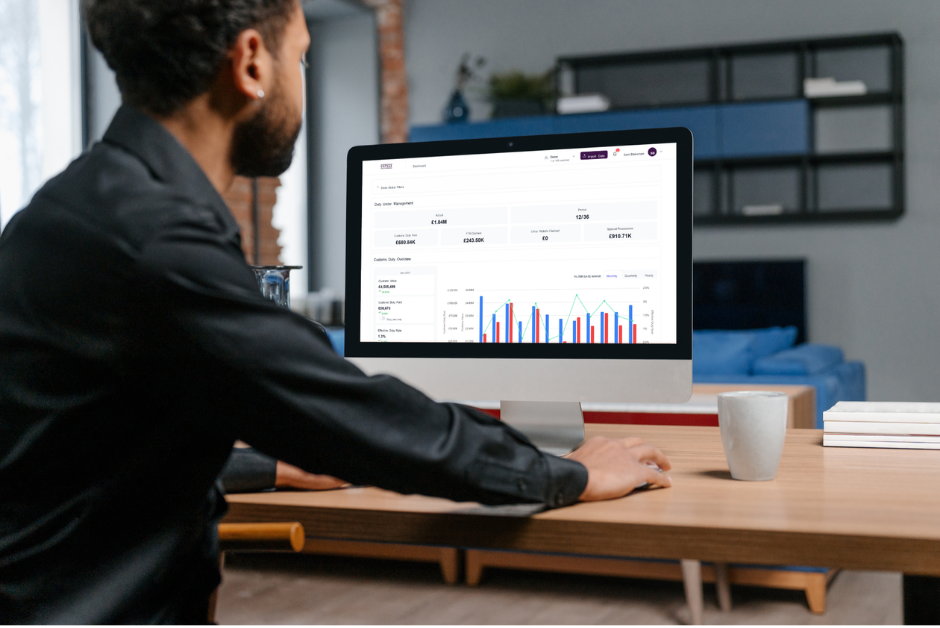
Wherever you land, the first move is the same. Get visibility before you switch anything. You cannot judge whether your broker is doing a good job, or whether your own team would do better, without seeing the data. A control layer earns its place here. CAT360 sits above your declarations, whoever files them, and checks the work. It audits your broker’s entries so nobody marks their own homework, and it catches errors after clearance while you can still correct them. File in-house and it does the same job on your own team. You move from trusting that customs is handled correctly to knowing it is.
When the answer is to rebuild
For businesses that decide the tipping point is behind them, or that an audit has forced the issue, the next step is to rebuild the customs function from the ground up. We have done this for large PLCs whose customs work had spread across so many departments that nobody owned the whole picture, in several cases after an unfavourable HMRC audit demanded it. The rebuild covers how you manage third parties, how you classify goods, rules of origin, valuation, master data, record keeping and audit. It is a full customs function for businesses that need one built properly.
Where to start
So, is using a broker outdated? No. A good broker is an asset. Not being able to tell whether that asset performs is the risk, and staying put because nobody has done the sums is a default dressed up as a decision. The exercise is short: work out your annual declaration volume, the true cost of your current arrangement, and whether you can see the quality of what gets filed in your name. That tells you which side of the line you sit on, and what to do next.
If you would like to see the quality of what is being filed in your name, whoever is filing it, we can show you what CAT360 reads from your own declaration data, and where rebuilding the customs function would pay for itself.
Contact Our Team …
Related Posts
What You Can’t Explain, You Can’t Control: The Visibility Gap in Supply Chain Customs
A supply chain director who has told…

UK-India Trade Deal Goes Live on 15 July: Here’s How to Be Ready for It
The UK-India trade agreement goes live…
